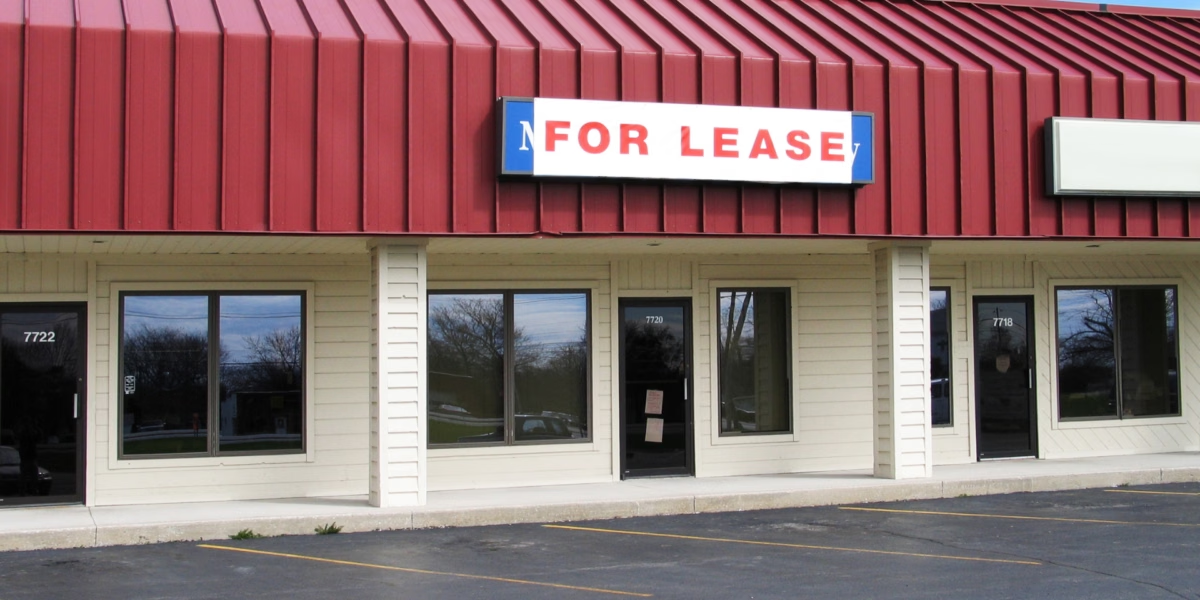
Most teams leave their office search until it is urgent. By then the market can see the panic.
That lost time shows up as higher costs, weaker terms and compromises you would never accept if you had options. Landlords are not just renting space. They are reading your timeline and pricing in your urgency.
Why does starting late kill your leverage?
When you start looking a few months before your lease ends, or only once people are sharing desks, you have already handed power to the landlord.
Commercial broker Tara Sutton writes that each step of the process can take weeks or months, from viewings to legal checks and fit out. If you compress that into a small window you cannot afford to walk away.
Landlords know this. If they sense you must move out in 30 to 60 days, they are far less likely to offer rent free periods or contributions to your fit out. Sutton notes that your strongest negotiation tool is the ability to walk away.
A rushed search removes that option, so you end up accepting higher rent or poor layouts that do not suit your team.
Workplace specialists at Office Principles say they often get calls from companies already bursting at the seams who are now scrambling for anything they can move into. At that point there is rarely time for proper planning or custom design, just a fast fix that usually costs more and delivers less.
What are the warning signs you have left your office search too late?
These signals tend to show up quietly at first, then all at once. If more than one feels familiar, it is usually a sign that time and leverage are already slipping away.

- You are already outgrowing your space and people are fighting for meeting rooms
- Your lease ends within six months and you have not toured a single building
- You feel pressure to accept the first space that is available rather than the one that is right
- Landlords are pushing their standard terms with little room to adjust
Starting early turns the search from a last minute scramble into a calm, strategic process which leads naturally to the question of how far in advance you should really begin.
When should you actually start your office search?
If urgency kills leverage, the obvious question is when to begin. Sutton advises that most businesses need far more time than they think: “Ideally, you should begin your search 6 to 12 months before your current lease expires or before your desired move in date.” That window protects you from panic decisions.
The search is not just a few building tours. You must define your needs, view spaces, agree a letter of intent, then let lawyers work through the lease. On top of that comes space planning and, often, some level of build out.
Office Principles push the timing even further, advising companies to start thinking about their office “at least 18 months ahead of anticipated need.” The goal is to have the “luxury of time” to test layouts, run a stay or go analysis and design a space that supports growth.
That longer lead time also lets you track the market rather than accept whatever is left. Early awareness of conditions means you can capitalize on favorable trends, such as high vacancy rates or landlord incentives.
When you are not racing the clock, you can wait for rent free periods, higher fit out contributions, or better break options.
Put simply, time is your strongest negotiating tool. If your needs are straightforward and you want mostly plug and play space, aim to start 6 to 9 months before you need to move. If you expect custom design, major growth, or a potential purchase, treat 12 to 18 months as your real starting line.
How should business milestones shape your office search?
While timelines are important, the real trigger for an office search is not just a date on your lease. It is what is happening inside your business. A big funding round, a sudden hiring ramp, a merger or a move to hybrid work all change how much space you need and where it should be. When those plans firm up, your search should start.
 You should treat the following as early warning signs that it is time to explore options now, even if you have years left on the lease:
- Your growth plan shows headcount doubling in the next 18 to 24 months
- Teams are fighting for meeting rooms or quiet space most days
- New leadership wants more in person days or a different culture hub
- You are opening new markets that change where people actually work
If you wait until people are squeezed in, dialing in from corridors or avoiding the office, the damage is already happening. Productivity drops first, then morale, then your ability to attract and keep good people.
Before you rush to relocate, run a simple audit. If the pain is mostly cosmetic such as tired decor, poor lighting or worn furniture, a refurbishment may solve it. If the issues are location, layout or sheer capacity, no amount of paint will fix them. The smartest move is to assess these factors early so you can choose a calm, planned change rather than an emergency one.
How ADAPT turns time into your biggest advantage
Rushing an office search hands control to the landlord. Starting early turns it into a calm, commercial decision. That’s where ADAPT comes in: we help fast-growing teams plan ahead, so they never have to panic-sign the wrong space at the wrong price.
We sit down with you to understand your hiring plans, funding runway and how your team actually works day to day. From there, we map a realistic timeline (often 6-18 months), then shortlist flexible spaces that fit your size, culture and budget – from simple first offices to fully branded hubs.
Because we know the market and have access to hidden, off-market options, you get genuine choice instead of “whatever’s left” when the clock is ticking.
As your free office-search partner, we stay with you from first brief through viewings, negotiation and move-in, sense-checking layouts and terms so you don’t overpay or end up stuck in a space that can’t flex as you grow. Over decades in the market, we’ve helped hundreds of teams avoid last-minute scrambles and secure offices that support productivity, culture and future hiring.
The costliest office decisions usually come from panic, not price. Give yourself time, and we can turn a rushed search into a strategic move that actually pushes your business forward.
Chris Meredith, ADAPT CEO & Founder
What can you do to get ahead of your next office move?
The biggest mistake teams make is waiting until they have to move. By then, urgency has already stripped away leverage. Starting early keeps options open, conversations calm, and negotiations commercial rather than emotional.
That is where ADAPT adds value. We help growing teams think ahead, map realistic timelines, and explore the market before pressure sets in. The result is not just a better office, but better terms, fewer compromises, and a move that supports how your business is actually evolving.
If your next office matters, your timeline matters more. Take the first step here.
When you’re ready to move, ADAPT’s London office search is the fastest route to a shortlist that actually fits. Free, independent and usually ready within 48 hours.