58 Wardour Street, Soho
W1D 4JQ
POA
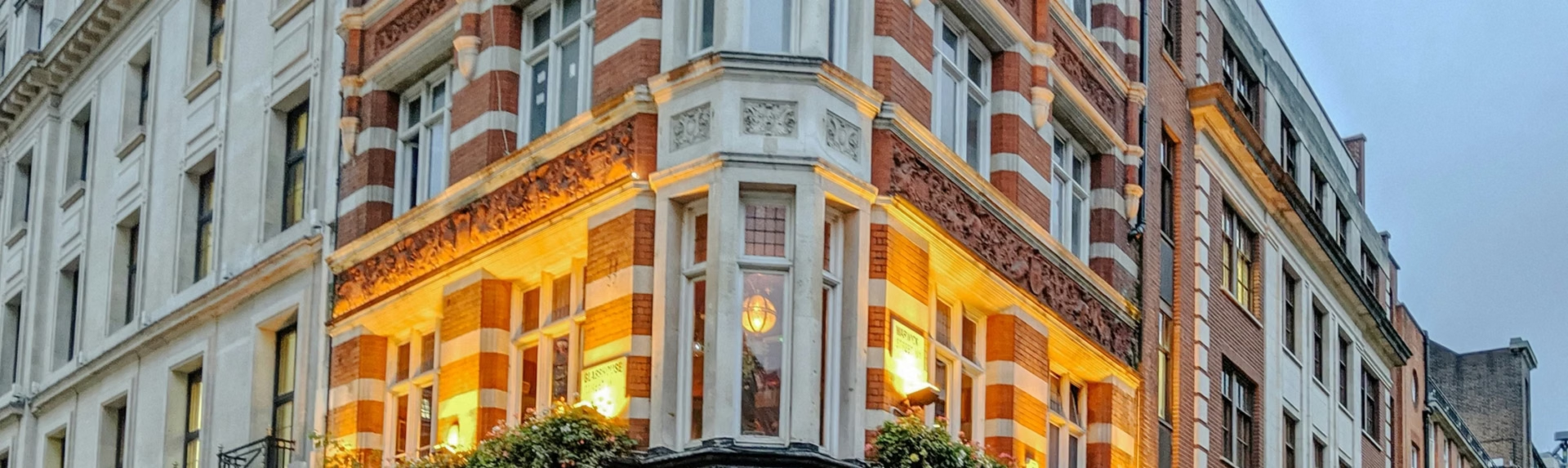
Soho is the creative centre of the West End, bounded by Oxford Street, Shaftesbury Avenue and Regent Street, and small enough to walk end to end. Office space starts at around £500 per desk all-inclusive, the mid to upper range runs from around £600 to £1,000, and the highest-specification buildings reach £1,200 to £1,800 per desk. The Elizabeth line at Tottenham Court Road transformed access to the area, putting Farringdon and Bond Street around five minutes away. Soho suits advertising, film, music, fashion and talent businesses, but it is a poor fit for anyone wanting a polished corporate address. – Last updated
| Budget tier | Essential | Comfort | Premium |
|---|---|---|---|
| From (£/desk) | £385/month | £600/month | £1,000/month |
| To (£/desk) | £600/month | £1,000/month | £1,800/month |
| Building grade | Older floors above the shops and bars, basic fit-out, no amenities. | Typically self-contained floor for 20 to 30 people, meeting room and kitchen | Fully fitted design-led floors with boardrooms and terraces |
| Where in the area | Secondary streets east and north, and the cheaper Soho Square floors. |
Soho Square, Old Compton Street and Wardour Street |
Dufour's Place and Broadwick Street |
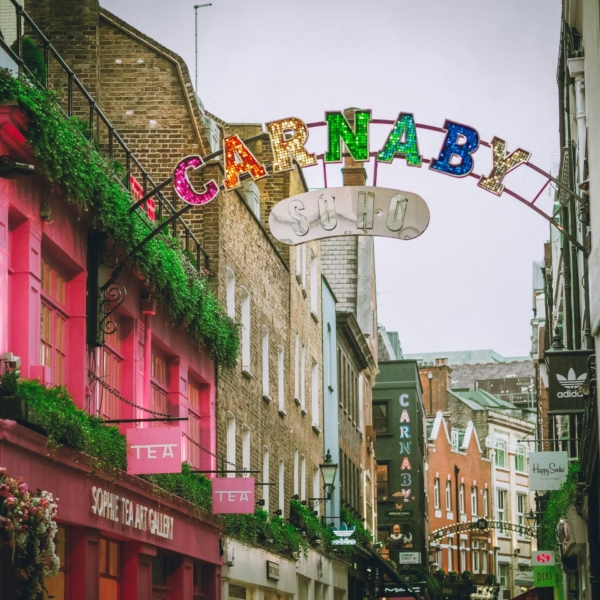
Soho has been a creative melting pot since the advertising agencies arrived in the late eighties and early nineties. Film and post-production followed, helped by the tax relief scheme introduced in the early 2000s for production work done in the UK, and Soho Square still holds film-related businesses including Dolby and the British Film Institute. Fashion clusters around Carnaby Street, where brands often test the area with a pop-up before committing. Music production and talent and representation agencies are drawn by the West End theatres and by venues such as Ronnie Scott’s. Soho is also a long-standing centre of the LGBTQ+ community, and Pride is focused here.
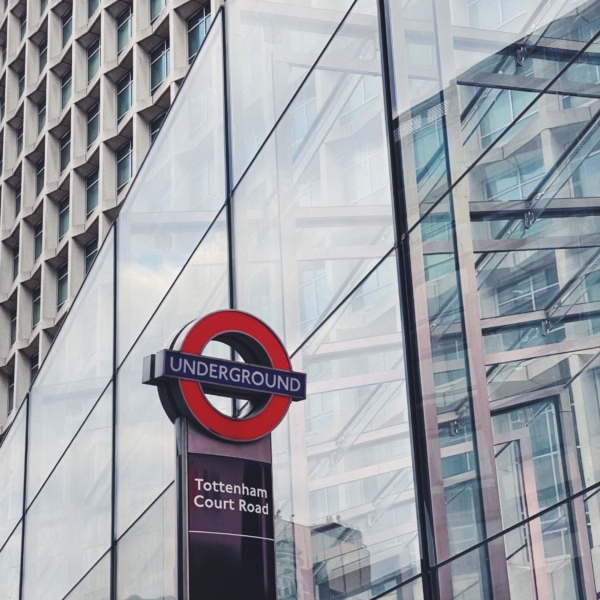
The Elizabeth line at Tottenham Court Road transformed Soho, with entrances opening directly into the area behind Soho Square. From there, Farringdon is around five minutes, Bond Street around five minutes and Liverpool Street around ten. Piccadilly Circus sits to the south on the Piccadilly line and Tottenham Court Road also carries the Northern line. Within its boundaries Soho is a village: Oxford Street to the north, Shaftesbury Avenue to the south, Regent Street to the west, and everything inside that is walkable.
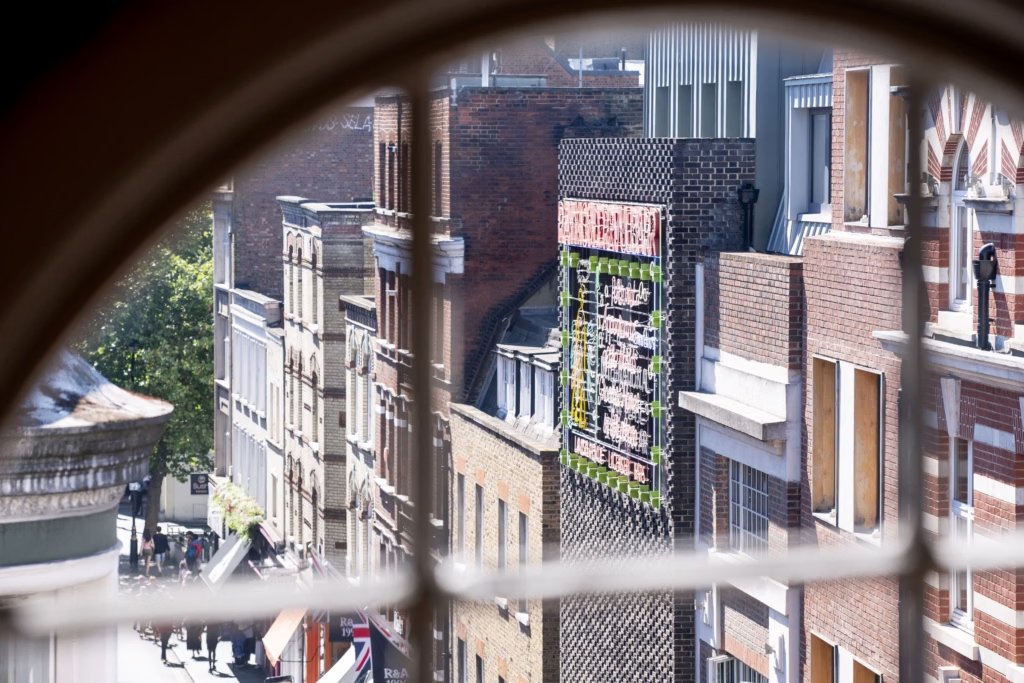
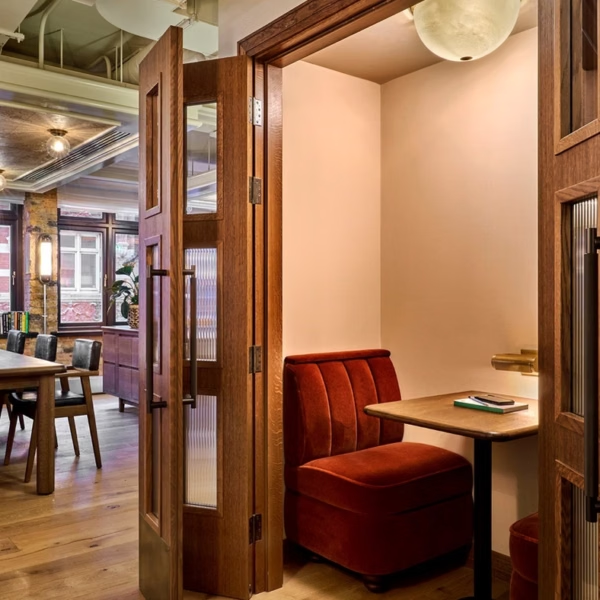
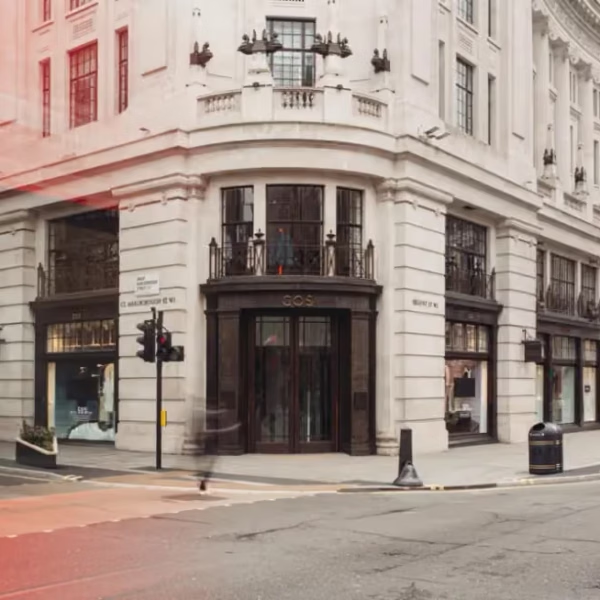
Height restrictions mean all of the office space is low-rise (no skyscrapers in Soho!), with Centre Point at Tottenham Court Road the obvious exception. Most buildings are traditional townhouse-style properties above the restaurants and bars, fitted out to a high standard behind the original facade. The office space in Soho is regularly described as New York loft style. Think original timber floors, exposed beams and brickwork, and large older steel-framed windows rather than modern glazing. New purpose-built office space does exist where blocks were cleared during the Elizabeth line works. Floor-plates are small, which means a company of 20 to 30 people can usually have a whole office floor to itself.
The West End is divided 5 key areas. Fitzrovia, directly north of Soho, has a very similar character but is less gritty and suits a business that wants the creative setting with a more polished reception. Mayfair, across Regent Street, is a different market altogether with hedge funds, investment firms and international companies not creative businesses. Marylebone, further north, is largely residential and attracts owners who want an office space close to home. Covent Garden shares Soho’s creative character. The trade-offs in Soho are mainly tourist volume and noise, a grittiness that suits some businesses and repels others, and small floor-plates that can constrain a company as it grows.
“Soho is definitely directed towards more creative businesses, because it’s got that grittier, slightly more unpolished feel about it. If you’re a company where everybody is still wearing blue suits and ties, Soho might feel a little bit gritty. But I think most of the negatives I’ve mentioned actually come back to one question: is Soho right for you? Because a lot of the things I’ve just described as potential negatives are exactly the things that many of my clients see as positives, and they’re precisely the reasons they want to be in Soho in the first place. You don’t necessarily have to plan what you’re going to do. You can walk out of the office and you’ve got all of this happening around you. If a company is looking for the buzz and the noise, then Soho all day long.”
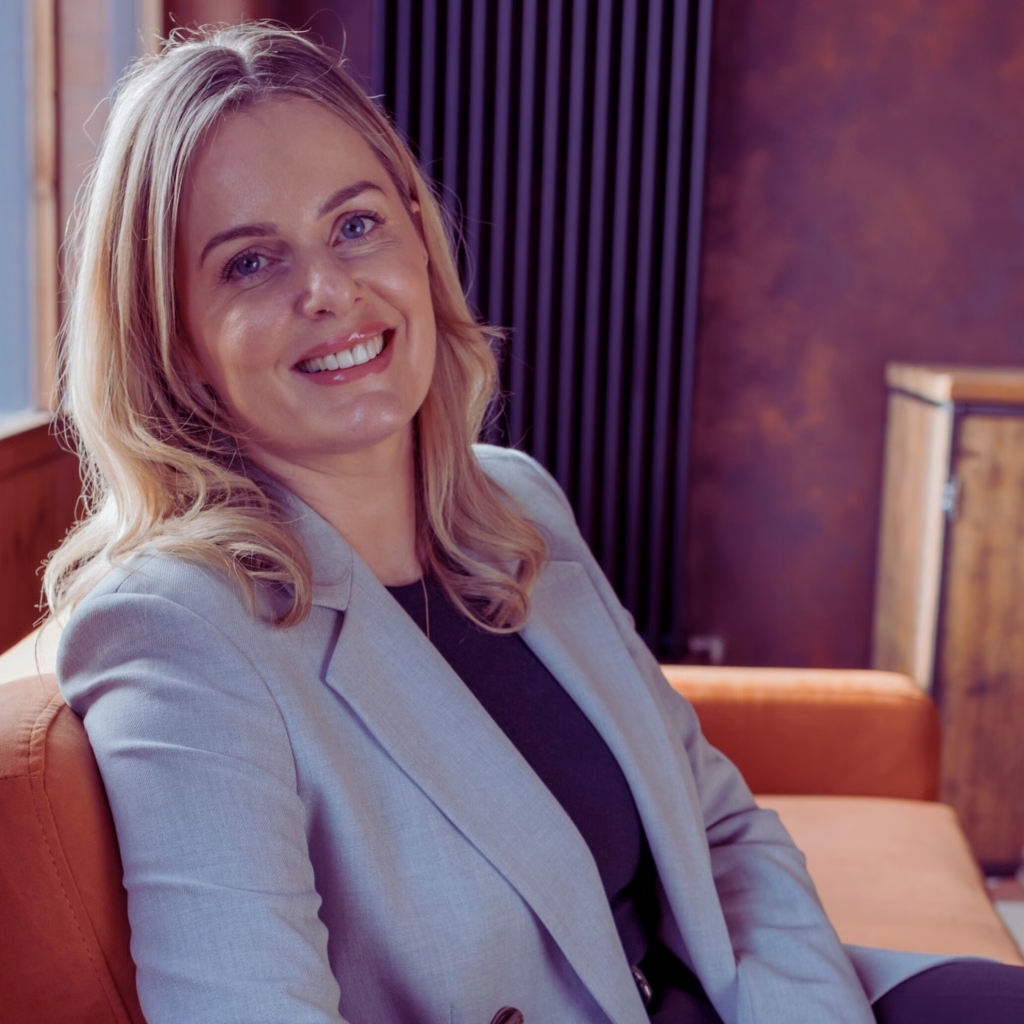
Chris Meredith, ADAPT Founder & CEO
 Chris Meredith, Founder & CEO
From around £385 per desk per month for the most cost effective space with limited amenities. The mid to upper range runs from about £600 to £1,000, and the highest-specification buildings reach £1,200 to £1,800. The area average is around £700.
A desk and a private office in the area, without the design-led fit-out or the amenity floor. For the exposed brick, the interiors and the creative feel that people come to Soho for, expect to start at around £750 per desk.
In all-inclusive managed and serviced pricing, yes. This really matters in Soho because Westminster business rates are notably high, so a headline rate here covers a larger cost than the same rate would in other areas of London.
From the Elizabeth line at Tottenham Court Road, Farringdon is around five minutes, Bond Street around five and Liverpool Street around ten. This has really transformed the area connectivity wise.
Access. Entrances opened directly into the area behind Soho Square, connecting Soho east to Liverpool Street and the City, and west out to Heathrow. It is the single biggest change the area has seen.
Advertising and creative agencies, film and post-production, music production, fashion around Carnaby Street, and talent and representation agencies serving the West End theatres. Soho Square holds film businesses including Dolby and the British Film Institute.
Advertising and creatives arrived in the late eighties and early nineties, post-production followed, and a UK tax relief scheme introduced in the early 2000s for production work done here created a boom that the area never lost.
Low-rise. Height restrictions mean no towers, so most space is townhouse-style property above the restaurants and bars, fitted out behind the original facade. Expect timber floors, exposed brick and beams and large older steel-framed windows.
Often, yes. Floor-plates are small, so a company of 20 to 30 people can frequently take a whole floor with its own meeting room and kitchen, a real perk for a business of this size in a multi tenant space. That is harder to achieve in the City, where floor-plates are far larger.
Tourist volume and the noise that comes with a busy nightlife area, a grittiness that suits some businesses and not others, and small floor-plates that can limit how far a growing company can expand within one building.
It depends how fast. Small floor-plates make it easy to get your own floor at 20 to 30 people and harder to keep expanding within the same building. Somewhere with larger floor-plates handles growth from 25 to 100 more easily. If you are a creative business who loves the buzz of Soho this is the trade off to remain in an office there as you grow.
Depends on the vibe you are after. Fitzrovia has a very similar character but is less gritty, with higher-specification modern developments around Charlotte Street. If you want the creative setting but need an impressive reception for corporate clients, Fitzrovia is usually the better fit.
They are one street apart and completely different markets. Mayfair is hedge funds, investment firms, oil and gas and wealthy international businesses, in prestigious town houses. Soho is creative, independent and deliberately unpolished.
Yes. Despite the different postcode, Covent Garden shares Soho’s creative character and attracts many of the same businesses through its connection to theatre and the arts.
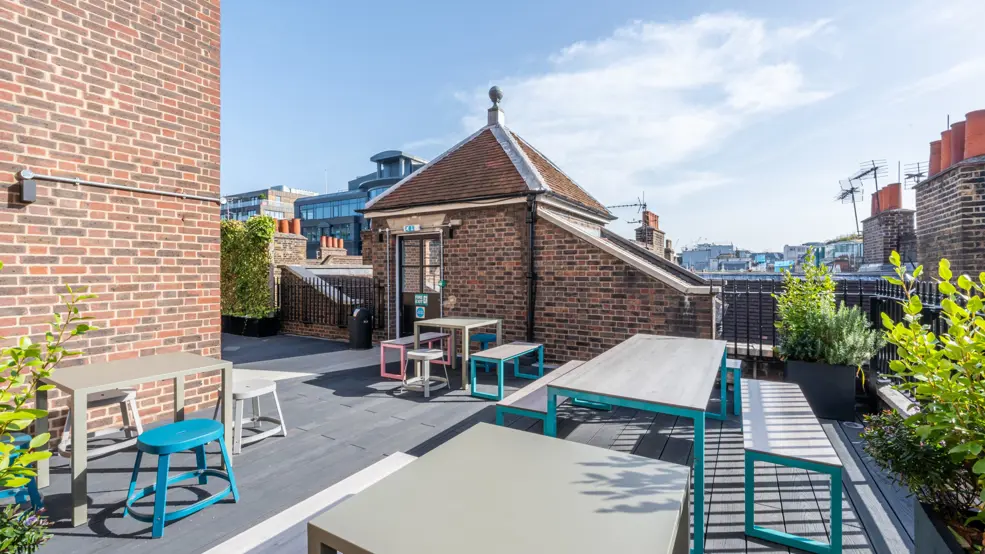
All-inclusive rates cover rent, business rates, utilities, internet, furniture, cleaning, building access and reception, plus shared meeting rooms. In the better buildings that also means gyms, roof terraces and communal areas suitable for informal client meetings.
Serviced offices are set up to move into pretty much immediately (as long as you are not waiting for anyone to vacate the office). Once a licence agreement is signed and deposit paid you can usually be in within a matter of weeks, if not days.







After trying larger brokers, we missed the personal and bespoke approach. We went with ADAPT and saved over £50k a year! Highly recommended.
Adam, Director, Tech Recruitment Company

Team at ADAPT are quite simply amazing! They take the stress out of finding the perfect space. I saved a huge amount on our office too.
Victoria, Global Senior VP, SaaS company

I’ve worked with Kirsty for over 15 years. She continues to understand us and I can always trust her to deliver the best office at the best possible price.
Danielle, Sales Director, FlexSpace Operator