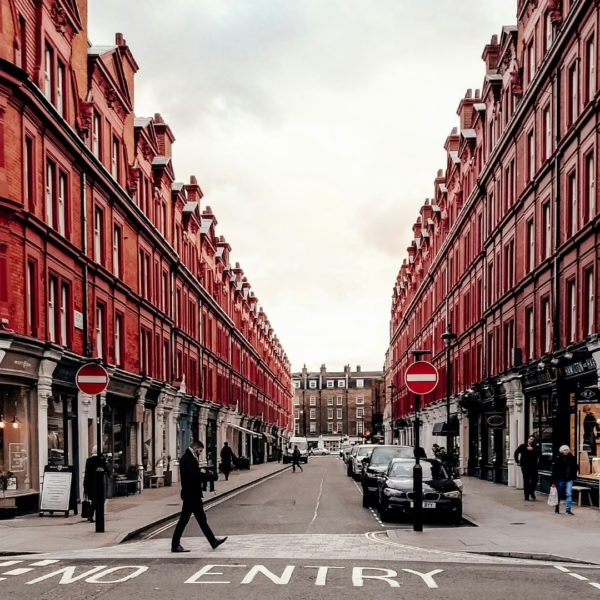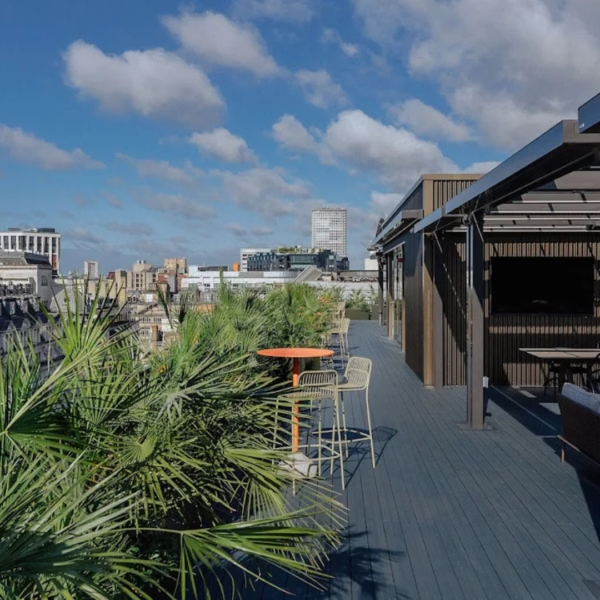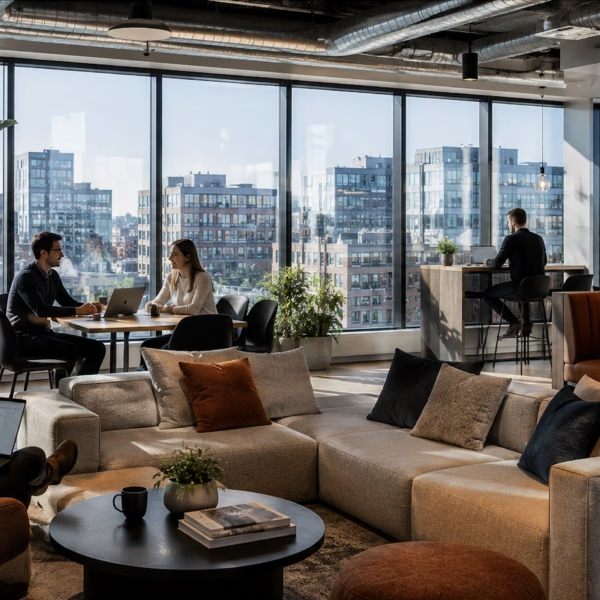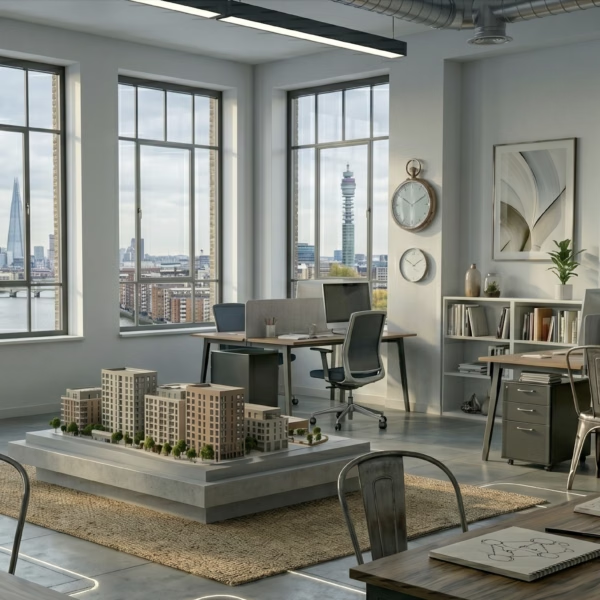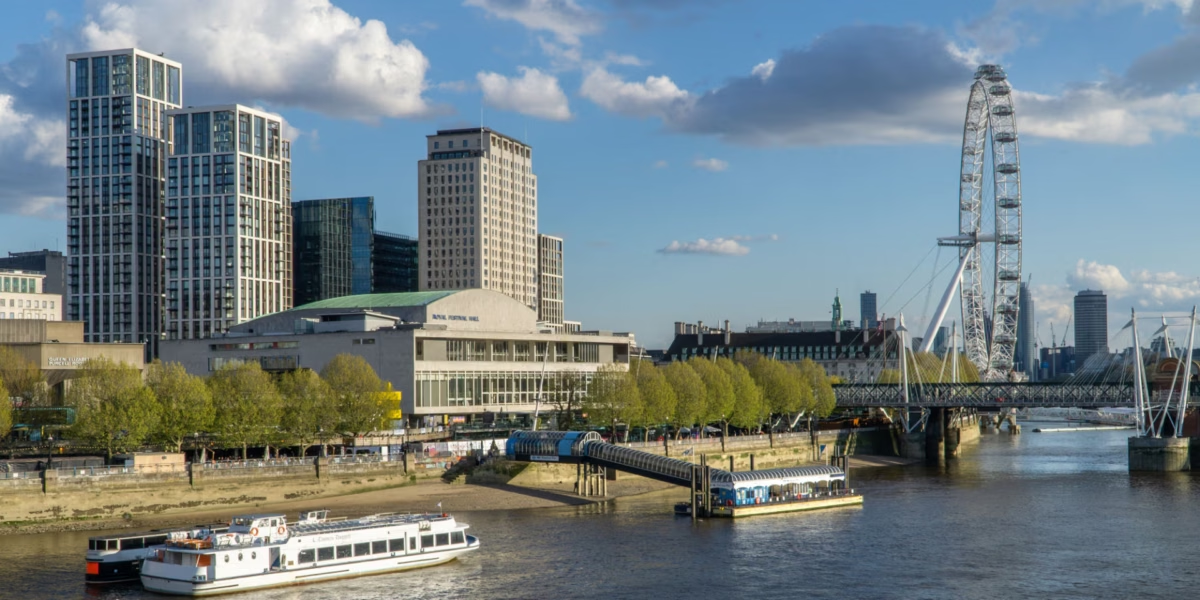
Southbank and Waterloo are quietly doing what Soho and Shoreditch did 10 years ago. Only this time the numbers are bigger and the prices are kinder.
If you are looking for a central London space that is both new in demand potential, and still relatively affordable, this is the one area where scale and value line up.
Why is Southbank and Waterloo London’s biggest missed office opportunity?
According to CBRE Research, Southbank has the largest future development pipeline of any central London office market when you compare it to current stock.
There are 4.1 million square feet of space under construction or already consented, equal to around 21% of existing offices and rising to more than 34% when you include schemes running to 2030.
That means something simple for office hunters. It is one of the only central locations where you can still find true new build space at volume, while headline rents sit around 20 to 30% below the traditional core markets of the West End and the City.
You get modern, efficient buildings and proper savings per desk.
Key facts that matter for occupiers
- A 4.1 million square foot pipeline, which research shows is unmatched in central London relative to stock
- New schemes like Timber Square and 18 Blackfriars Road that offer large, single ownership buildings that are easier to brand and fit out
- Total office floorspace set to grow from 19.5 million to 21.3 million square feet by 2029, potentially making the area larger than Docklands including Canary Wharf
The Waterloo Station Masterplan, led by Lambeth Council and Network Rail with its consultant team, adds another layer.
The plan estimates 10,000 new jobs plus over 40 new walking and cycling routes and more than 20 new station entrances, turning the station into a true mixed use hub rather than just a commuter funnel. It’s a massively buzzy area!
To understand why this expanded infrastructure pairs so well with the area’s growing pull for staff and clients, you need to look at how Southbank evolved from industrial fringe to cultural heartland.
How did Southbank become London’s next cultural epicenter for business?
Southbank has already made the hard jump from industrial fringe to cultural heavyweight. The area now hosts 14 theatres, including the National Theatre and The Old Vic, plus world class galleries like Tate Modern.
Add three Michelin star restaurants and hundreds of pubs and you have a genuine lifestyle magnet for staff and clients.
This cultural oull is not just for tourists. Almost 1 million square feet of offices have been taken by large companies moving from the West End over the last decade. A real shift since the West End’s heyday.
These are traditional big business occupiers choosing Southbank for high quality space at lower costs, without asking teams to compromise on food, culture, cafes, transport or even nightlife.

With the Masterplan estimating 30 million visitors a year to the wider area, combined with two of the UK’s busiest stations, the district creates a location that is easy to reach, simple to navigate and compelling for hybrid teams who split time between home, office and client sites.
For many businesses the value equation is clear. You get access to new and efficient buildings at a discount to the West End, but in a district that already feels premium for staff.
That helps with talent attraction, client perception and day to day productivity, because people actually want to come in and use the space you are paying for.
Taken together, Southbank and Waterloo already behave like a prime market, which is why the next step is understanding how to secure the right building, on the right terms and at the right moment before rental growth and demand really start to bite.
How should you approach timing and risk in Southbank and Waterloo?
Success in Southbank is less about spotting a cheap deal and more about getting the timing right. Early commitments on major schemes can secure space that will be hard to find later.
Pre completion deals often come with sharper terms and a better choice of floors and layouts, if you are ready to plan ahead.
The area is also moving toward a net zero future. The Waterloo and South Bank Future Neighbourhoods 2030 vision aims to cut carbon, improve air quality and add green space.
For occupiers this means new buildings are designed to be energy efficient from day one. That can reduce running costs and help meet investor expectations without needing expensive retrofits later.
Key points to consider are below
- Start your search early especially if you need large or connected floors
- Probe construction timelines and ask what happens if completion slips
- Use flexible space as a bridge (the area has many flex options_ if your current lease expires before your new building is ready
- Factor in future gains from the Waterloo Station masterplan which should further lift the area over time
There are real risks if you misjudge the cycle. Wait too long and rising rents plus limited top tier options will narrow your choices.
Move without a clear plan and construction delays or misaligned handover dates can disrupt operations. The businesses that benefit most are those that act now with a structured strategy for space, timing and flexibility.
How ADAPT helps you catch the Southbank & Waterloo wave
This article shows a clear pattern: Southbank and Waterloo offer rare value and scale in central London, but the upside comes with timing and risk.
New builds, pre-completion deals, changing transport links and hybrid working all make it harder to know when to move and what to commit to. ADAPT exists to remove that guesswork for growing teams.
We help you make sense of the options – from big new schemes to smaller flexible spaces that can act as a bridge while you wait for a future HQ.
By understanding your headcount, culture, budget and timings, we quickly narrow the market to a short list that actually fits how your team works, not just what’s technically available on paper.

Because we live and breathe London’s office market, we know which buildings are truly future-ready on things like energy use and fit-out, and where the real branding opportunities lie.
We support you through negotiations, handover dates and move-in so your space, lease length and growth plans all line up.
Over the last two decades our team has helped companies of every size move into spaces that feel like a natural extension of their brand – often securing off-market options and smarter terms that most teams would never see alone.
Southbank and Waterloo are where London’s next business chapter is being written, but timing is everything. Our job is to make sure ambitious growth-loving teams don’t just find space there – they land in the right building, on the right deal, at the right moment.
Chris Meredith, ADAPT CEO & Founder.
What can you do to get ahead of the Southbank & Waterloo opportunity?
If you’re raising funds this year, if your team has outgrown its current set-up, or if you’re stuck in a legacy lease that doesn’t match how you work anymore (especially if AI is getting you rethinking future team size), now is the moment to look at Southbank and Waterloo.
The best new spaces will go first – especially the ones that balance price, quality and location.
You don’t have to figure it out alone. ADAPT can help you compare pre-lets, managed offices and flexible options, map them to your timings, and even use short-term space as a bridge so you’re never left without a home.
For occupiers, ADAPT’s support is completely free – from first conversation to move-in. Get your free consultation today.
Finding London office space that genuinely fits your team – size, culture, budget, location – is what ADAPT does. Free to use, fast to set up and always independent.